
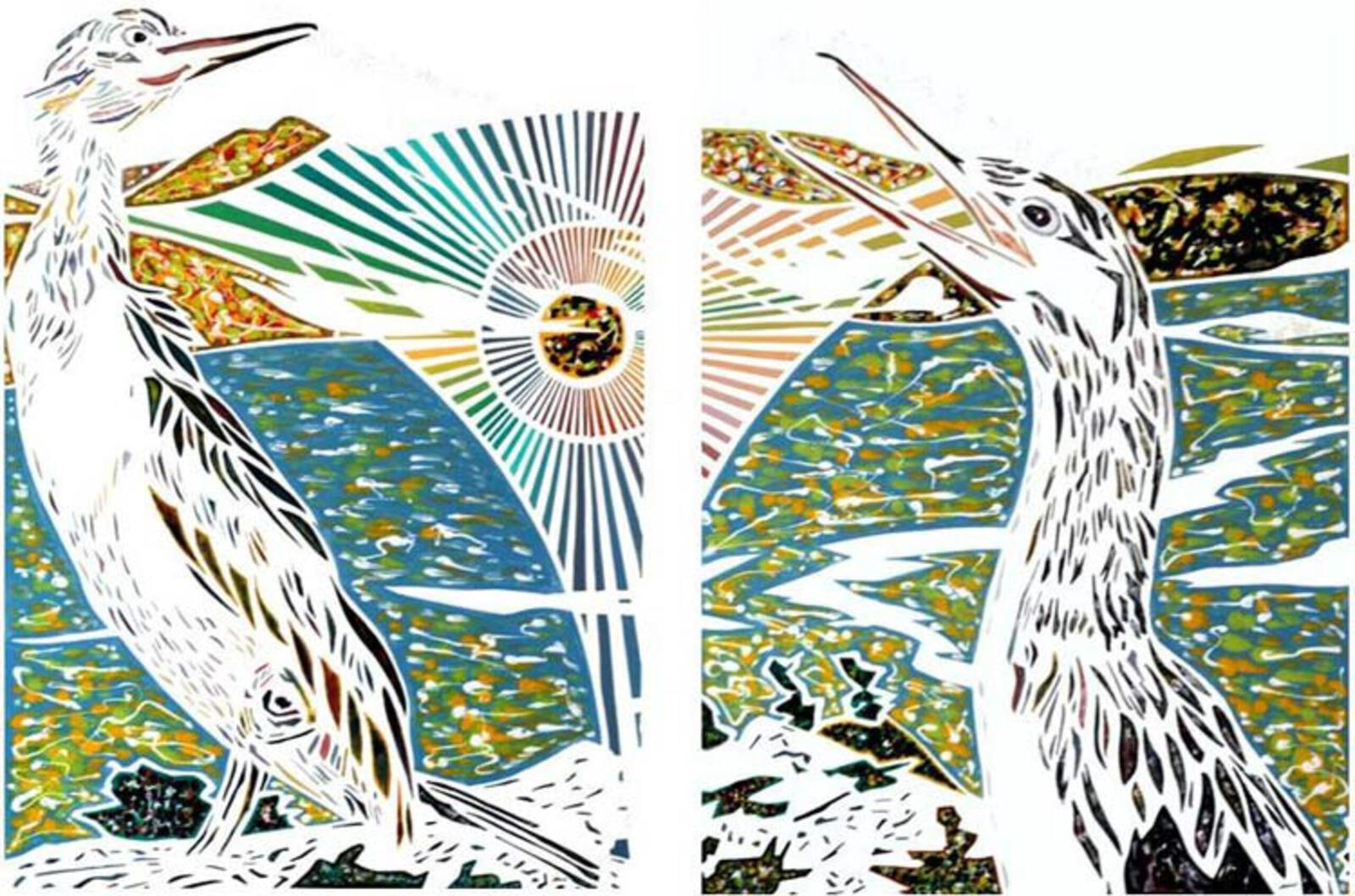
The cormorant is 80 to 100 cm long and has a wingspan of 120 to 150 cm. It has webbed feet and catches fish by diving. The beak is long and has a hook-shaped tip. The feather suit seems black, but actually it’s largely deep bronze green. Each feather of the upper wings has a subtle black fringe, which gives the bird a scaled appearance. In the spring, their cheeks and thighs are feathered white, the crown and neck are provided with silvery white mane and the unfeathered throat turns yellow. This gay dress fades away during the breeding season. They are migratory birds: in severe winter weather, cormorants from the Netherlands migrate south to the Mediterranean, while cormorants from the Baltic sea region and northern Germany hibernate here. The cormorant often sits with spread wings on a pole near the water to allow its plumage to dry. Diving birds in general should not have too much buoyancy. To this end, they have heavier bones and smaller air-chambers and they’re able to squeeze air out of their feathers. Cormorants, who dive deep and hunt fish for a long time, go even further. They allow their feather suit to get wet. The barbs on their feathers are relatively far apart, so that the air is pushed out and invading water gets free play. In South-East Asia, tame cormorants are trained to catch fish for their bosses, putting a ring around the bird's neck so it can only swallow very small fish.