
Kroatie
Kroatie
dated 2021 until 2023
(click on an image to enlarge an artwork)
stuur een bericht
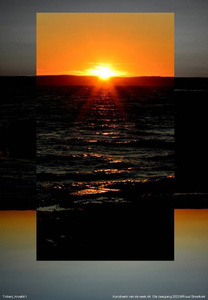
Tribanj, Kroatië 1
2023The sun sets above the Adriatic coast near Tribanj in Croatia. The earliest evidence of human presence can be found here in various caves. But with the arrival of the Liburnians during the Iron Age, these caves were abandoned as primary settlements. Instead, the Liburnians built fortified hill-forts The hill-fort Tribnjina e.g. stands at 330 meters above sea level and thus dominates the surroundings. The old settlement was protected on the west side by a gorge and on the north-, east- and south- side by defensive walls. The Liburnians buried their dead in Tumuli, burial mounds of earth and stones, which are found in large parts of the world. surroundings. The old settlement was protected on the west side by a gorge and on the north-, east- and south- side by defensive walls. The Liburnians buried their dead in Tumuli, burial mounds of earth and stones, which are found in large parts of the world.
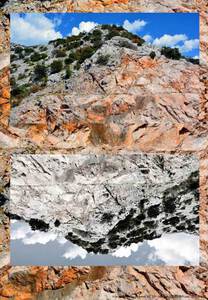
Prizna 5
2023We drove here from the interior of Croatia through the ‘Northern Velebit’ National Park to the coast, near the island of Krk. The Northern Velebit is an exciting and rugged mountain area, known for its botanical richness and an exceptional view over the Adriatic Sea. When we reached the coast, we picked up a hitchhiker with a flat tire, a boy who planned to cycle around the Adriatic sea and then cross over to Italy by boat. But after we stowed his bike in the car with great difficulty, it soon became clear that he expected us to take him along the coastal road about 140 km southwards, to where the ferry departed. But we dropped him off halfway and so we ended up here at Prizna, facing the island Pag.
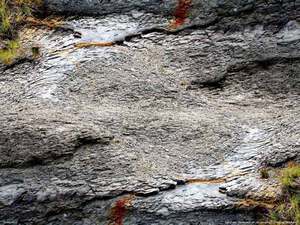
Gologorica 6
2022The Yugoslav peninsula of Istria is divided into Bijela Istria: the white peaks, Siva Istria: the gray fertile interior and Crvena Istria: the blood-red area near the coastline.On the north side Istria is sheltered by the Alps and its own higher inland. It has a Mediterranean climate with dry and warm summers, while the Adriatic Sea provides a pleasant climate with temperatures between 26°C in Aug. and about 11°C in March. In winter, the 'Bora' brings cold and clear weather from the north, but freezing is rare even in the small and shallow bays. In the summer, the 'Jugo' brings rain from the south and the 'Mistral' blows a summer breeze from the interior to the sea. After World War II, the vast majority of Istria was assigned to Yugoslavia. In 1944-‘45, many people fell victim to revenge and purges by Tito partisans. Mostly Italians, who were accused of collaboration during the so-called Italian occupation. Anyone who had held a position in the service of the former state authority, was considered guilty.
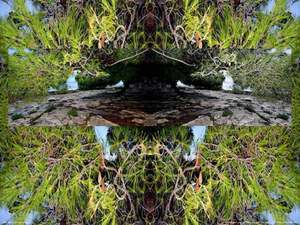
Dennenboom Savudrija 2
2022Pine tree Savudrija 2 On the coast of the Istrian peninsula in former Yugoslavia, the pine trees come up to the coastline. The name Istria comes from Histri, an Illyrian-Indo-European people who inhabited the west of the Balkan Peninsula. The Roman historian Strabo mentioned them as the inhabitants of this region. They were described by the Romans as a ferocious tribe of pirates, for whom the rocky coast offered a natural protection. In 117 BC, after two wars, the Romans managed to bring this tribe under their authority.
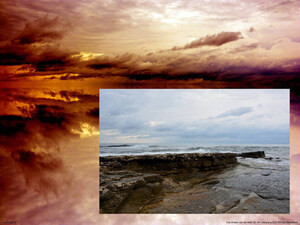
Cape Lako 8
2022Although it’s just drying up after a chilly day with lots of rain (the parking lot at the campsite is flooded), we take a stroll along the beach at the Adriatic Coast near Savudrija in Croatia and create a beautiful sunset with the last cloud patches ourselves....
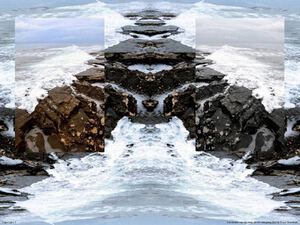
Cape Lako 3
2022We are near Savudrija on the Istrian Peninsula in Croatia and are staying overnight at a campsite in a pine forest on the Adriatic coast with apparently often a beautiful view of eye-catching sunsets. Unfortunately it was cold and wet when we arrived. But as it became dry in the evening, we could still take a stroll along the beach. The foam washes over the shiny rocks and slowly dissolves into the sea.
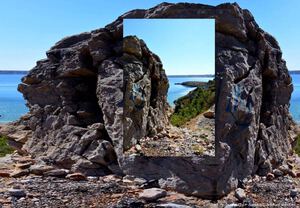
Prizna 7
2022We drove here from the interior of Croatia through the ‘Northern Velebit’ National Park to the coast, near the island of Krk. The Northern Velebit is an exciting and rugged mountain area, known for its botanical richness and an exceptional view over the Adriatic Sea. When we reached the coast, we picked up a hitchhiker with a flat tire, a boy who planned to cycle around the Adriatic sea and then cross over to Italy by boat. But after we stowed his bike in the car with great difficulty, it soon became clear that he expected us to take him along the coastal road about 140 km southwards, to where the ferry departed. But we dropped him off halfway and so we ended up here at Prizna, facing the island Pag.
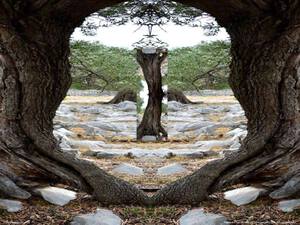
Olive Gardens of Lun 14
2021Lun is a village on the very northern tip of the island of Pag in Croatia. Pag seems to have an almost lunar landscape, but then all of a sudden one finds oneself in the middle of a vast olive orchard, with thousands of ancient olive trees, including one, which is claimed to be 2000 years old and another one that is supposed to be 1600 years old. The population lives mainly from tourist activities in the summer months, such as B&B and restaurants. But there is also fishery and besides the olives, sheep are kept on the island and grapes are grown, of which a white wine, the Žutica, is pressed.
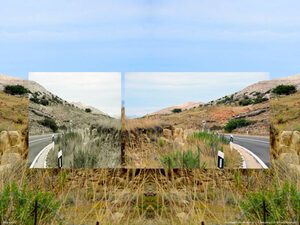
Miškovići 3
2021This is a village on Pag, an island in the Adriatic Sea, which belongs to Croatia. The island is about 60 km long and 2 to10 km wide and it counts about 8,000 inhabitants. On the east side of the island, Pag has a fixed shore connection to the mainland with the bridge Paški Most. The island looks like a lunar landscape, yet more than 40,000 sheep graze on Pag and the island is famous for its sheep cheese, the paški sir: Furthermore, salt extraction is an important source of income, the main salt producer of Croatia is Solana Pag.
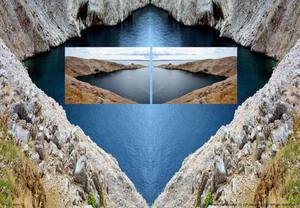
Paški most 12
2021From the mainland of Croatia we drove over the Pag Bridge, which is called Paški Most in Croatian. The bridge is 301 meters long and 9 meters wide and has a 201 meter long arch at an altitude of 35 meters above the Adriatic Sea. Due to its location, it has to deal with strong gusts of wind, especially during the so-called Bora, a cutting cold wind that occurs in this region. During its construction, it stormed for 4 months with wind-forces of 8 on the Scale of Beaufort. The bridge was opened on 17 November 1968, and has since proved to be an important and useful part of the infrastructure for the development of the island Pag.
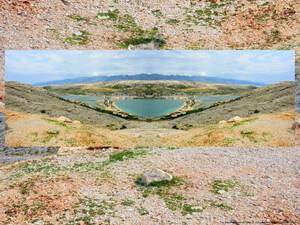
Pag 5
2021From this hill one has a view on the small Croatian town of Pag, on the island of the same name in the Adriatic Sea. The island is reminiscent of a kind of lunar landscape in clear seawater. It has a stony surface with here and there old olive orchards. Salt extraction is an important source of income and there are more than 40,000 sheep on the island. No wonder it is famous for its sheep cheese: Paški Sir:
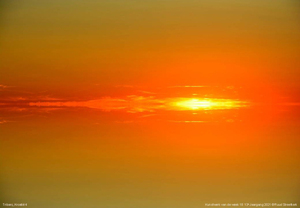
Tribanj, Croatia 4
2021The sun sets above the Adriatic coast near Tribanj in Croatia. The earliest evidence of human presence can be found here in various caves. But with the arrival of the Liburnians during the Iron Age, these caves were abandoned as primary settlements. Instead, the Liburnians built fortified hill-forts The hill-fort Tribnjina e.g. stands at 330 meters above sea level and thus dominates the surroundings. The old settlement was protected on the west side by a gorge and on the north-, east- and south- side by defensive walls. The Liburnians buried their dead in Tumuli, burial mounds of earth and stones, which are found in large parts of the world.
Senj, Croatia 2
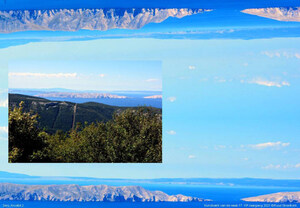
2021From the interior of Croatia we reach the city of Senj on the Adriatic coast, a place that has been inhabited since prehistoric times. Greek documents from the 4th century BC already mention a settlement of the Illyrian tribe the Lapydes on this spot. And 200 years later, Senia was a thriving Roman city in the Dalmatia-province, used by the Romans as a stronghold against the Illyrians. After the fall of the Roman Empire, in the 7th century AD, the Avares and the Croatians settled here. From 1470 the city was besieged by invading Ottoman and Venetian troops. The wars with the Ottomans lasted well into the 17th century. During this time the Uskoks lived in Senj. They had small units of soldiers navigating with fast rowing boats, which turned out to be very effective. But after a conflict with Venice, the Uskoks were expelled from the area in 1617.