
Germany.
Germany These works of art are based on landscapes I encountered on my travels through Germany.
dated 2011 until 2023
(click on an image to enlarge an artwork)
stuur een bericht
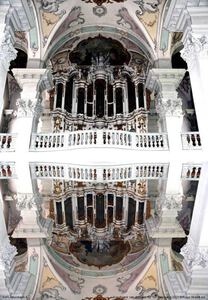
Church Amorbach 4
2023Amorbach is located in the German state of Bavaria. According to legend, a local count called the Frankische bishop Saint Pirmin to the area to establish a monastery with chapel west of the present city. A pupil of Pirmin, an Aquitaine named Amor, would then have moved the monastery to its current location in 734 and the city was named after him. In the years 1735 to 1740 the church was completely renovated in late Baroque/early rococo style and around 1780 the largest organ in the world was installed. The frescoes depict the story of Saint Benedict, who lived from 480 to 547 and who was the inspiration of the Order of the Benedictines. His famous spell is Ora et Labora: pray and work. The latter was a revolutionary statement because monastics, who were often of nobility, found until then 'manual labour' far below their dignity. Benedict's rule is a balanced rhythm of 8 hours of prayer, 8 hours of work and 8 hours of rest.
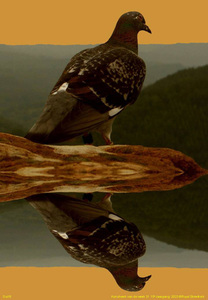
Pigeon 6
2023Men kept pigeons of old as poultry or carrier-pigeon. Drawings of domestic pigeons are already found in an Egyptian tomb from the period of the fifth dynasty (+ 2000 b.c.). This pigeon took a rest on a rock in the Pfälzerwald in Germany, although it hadn’t delivered its message yet.
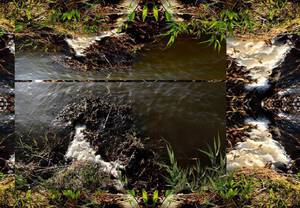
Bodstedter Bodden 7
2023The Bodstedter Bodden is a lagoon on the north coast of Germany, west of the island of Rügen, which is part of the so-called Darß-Zingster Bodden-chain. On the north side the lagoon is bordered from the Baltic Sea by two parts of a T-shaped peninsula: Darß and Zingst. On just a single point, the Bodden is 10 meters deep, but in general it is nowhere deeper than 3 meters. The strongly indented, reed-bordered coastline forms a picturesque landscape, resulting in the fact that the coastal villages are popular tourist destinations. It reminds me of the coast of the IJsselmeer in Holland, thus a bit familiar
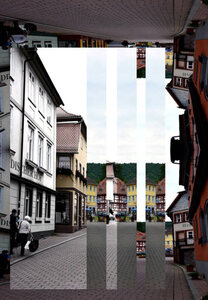
Amorbach 6
2023The city of Amorbach is located in the northeastern part of the Odenwald in Bavaria, Germany. In Amorbach there is a so-called 'tithe barn', built in 1488, which has played a central role in the city for more than 500 years. A tithe barn is the building in which during the Middle Ages the rents and tithes of tenant farmers and peasants to a castle lord or a monastery were stored. Many farmers were obliged to pay tithes, often a rent in kind, such as one-tenth of the harvest, for instance a predetermined number of sheafs. So in this barn tithes in the form of products for the local prince were stored. After an extensive renovation in the 1960s, the building became a cinema and today it is a cabaret theat
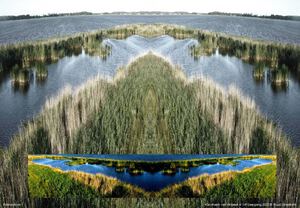
Peenestrom 1
2022We are here on the north coast of East-Germany and overlook the Oderhaf and the island of Usedom. The border between East-Germany and Poland is formed by the river Oder and the Oderhaf is an estuary formed by that river and some tributaries such as the Peenestrom. This part of the estuary is considered the mouth of the latter river.
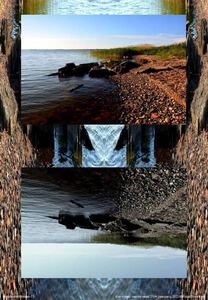
Bodstedter Bodden 13
2022The Bodstedter Bodden is a lagoon on the north coast of Germany, west of the island of Rügen, which is part of the so-called Darß-Zingster Bodden-chain. On the north side the lagoon is bordered from the Baltic Sea by two parts of a T-shaped peninsula: Darß and Zingst. On just a single point, the Bodden is 10 meters deep, but in general it is nowhere deeper than 3 meters. The strongly indented, reed-bordered coastline forms a picturesque landscape, resulting in the fact that the coastal villages are popular tourist destinations. It reminds me of the coast of the IJsselmeer in Holland, thus a bit familiar.
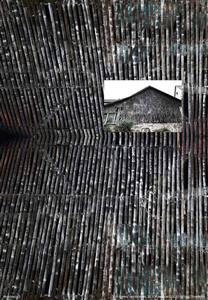
Amorbach 3
2020The city of Amorbach is located in the northeastern part of the Odenwald in Bavaria, Germany. In Amorbach there is a so-called 'tithe barn', built in 1488, which has played a central role in the city for more than 500 years. A tithe barn is the building in which during the Middle Ages the rents and tithes of tenant farmers and peasants to a castle lord or a monastery were stored. Many farmers were obliged to pay tithes, often a rent in kind, such as one-tenth of the harvest, for instance a predetermined number of sheafs. So in this barn tithes in the form of products for the local prince were stored. After an extensive renovation in the 1960s, the building became a cinema and today it is a cabaret theat
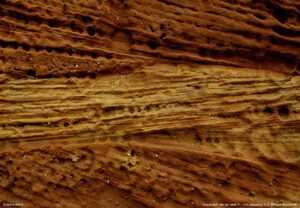
Drachenfels 5
2020This wall of coloured sandstone is part of the Drachenfels, a typical rock castle in the Pfalz in Germany, overlooking the upstream heights of the Rhine Plain. On the west part, the remains of a Roman fort were found. In later era’s it became a notorious haunt of robbers. The name of the rock is associated with the dragon from the Nibelungen Saga. Inside the rock are two cavities, which are called the 'dragon chamber' and the 'dragon cave' and indeed: the sandstone resembles the skin of a dragon.
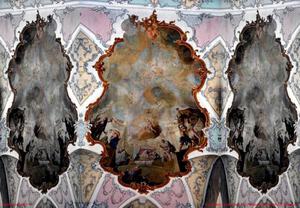
Church Amorbach 3
2020Amorbach is located in the German state of Bavaria. According to legend, a local count called the Frankische bishop Saint Pirmin to the area to establish a monastery with chapel west of the present city. A pupil of Pirmin, an Aquitaine named Amor, would then have moved the monastery to its current location in 734 and the city was named after him. In the years 1735 to 1740 the church was completely renovated in late Baroque/early rococo style and around 1780 the largest organ in the world was installed. The frescoes depict the story of Saint Benedict, who lived from 480 to 547 and who was the inspiration of the Order of the Benedictines. His famous spell is Ora et Labora: pray and work. The latter was a revolutionary statement because monastics, who were often of nobility, found until then 'manual labour' far below their dignity. Benedict's rule is a balanced rhythm of 8 hours of prayer, 8 hours of work and 8 hours of rest.
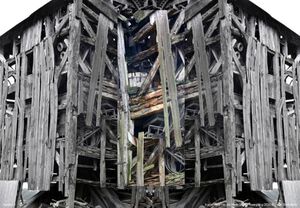
Wurzen 3
2020Wurzen 3 Just outside the town of Wurzen near Leipzig in East Germany I saw this mill. Well, mill... it was the carcass of a building that most likely once was a mill. Wurzen, located on the river Mulde, was built by Slavs in 600 and first mentioned as a city in the 12th century. In 1637, during the Thirty Years’ War, the city was looted by the Swedish army and almost completely burned down. In 1768, Goethe travelled from Leipzig to Dresden through Wurzen. During the long wait for the ferry he was inspired for a passage in his Faust....Streefkerk, who came by this mill in Wurzen in 2016, was inspired to create this work.
Elbe 3
2017When travelling from the Netherlands to the East, one will always have to cross the Elbe somewhere. This shouldn’t be a problem, as there are plenty of bridges or ferries. The river takes rise in the Giant Mountains in the Czech Republic, enters Germany near Dresden and then flows north-westward to Hamburg. Because the river is navigable, it is an important waterway for cargo-vessels. The mouth of the Elbe at Cuxhaven, where it debouches in the North Sea, is at least 15 km wide.
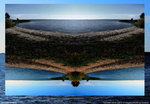
Bodstedter Bodden 1
2016This lagoon is situated on the Baltic Sea in Pommerania in North-East Germany. They are called ‘bodden’. These bodden are enclosed by long narrow spits of land and islands, leaving only narrow passages to the open sea or to adjacent lagoons. Their banks are generally overgrown with reeds. Freshwater flows in from the mainland and at the same time there is a daily fresh inflow of salt seawater with the tides, fluctuating with the wind-direction and wind-strength. All these factors lead to fluctuating salt gradients and special ecosystems in a dynamic area, where sudden changes may occur, for instance when old passages to the sea are blocked by storm surges or new ones come about.
Eifel 2
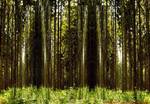
2016The Eifel region is the eastern part of the medium-high Eifel-Ardennes-plateau. It is located north of the Moselle river and West of the Rhine. The largest part is located in Germany and a small part in Belgium. The highest point is the so-called 'Hohe Acht' (747 m). In the tertiary period vigorous volcanic activity took place in the Eifel. The craters, caused by explosions of volcanic gasses have filled with groundwater and are called ‘Maare’. The last eruptions took place 10.000 years ago. Research indicates that this area is still geologically active: the whole Eifel area is rising 1 to 2 millimeters every year. In the past there have been inactive phases for 10.000 à 20.000 's years, which leads to the assumption that future eruptions are still possible.
Mecklenburger bucht 4
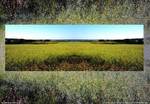
2016This rapeseed field is located on the Mecklenburger Bucht, the largest bay on the German shore of the Baltic Sea, near the lighthouse of Bastorf. Rapeseed originates from the eastern part of the Mediterranean Sea, where the oil was used for consumption and as lamp oil. From the 17th century on it became the most important oilseed-crop in the Netherlands and Northern Germany. But its use was limited to lamp oil, lubricant in steam engines and the production of soap. Because of its high content of erucic-acid, rapeseed oil tastes bitter, making it unfit for human consumption or animal food. But in the 70's new rapeseed varieties, poor in erucic-acid, were produced, of which the oil could be used for food purposes and the rest product, oil-cake, for cattle feed. Nowadays rapeseed is also used for the production of biofuel.
Pfälzer-wald 5
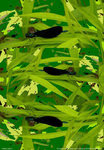
2016Along a small stream in the nature reserve Pfälzerwald in Germany, this black-and-blue damselfly finds his or her way. Damselflies are distinguished from dragonflies by a number of features. In general damselflies are built lighter and their eyes are relatively small and far apart. When resting, a dragonfly will expand its wings behind the back (with the exception of the armored damsels), while dragonflies keep them spread. The larvae of both species live in water and are fairly small, about two centimeters long, with a narrow abdomen. But the larvae of dragonflies have three feather-like tail gills and thus ' jet-propulsion ' under water, while the larvae of damselflies have no gills and move around by squirming their abdomen back and forth. Damselflies are found mostly in plant-rich, clean, still waters.
Great Tit 1
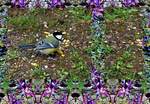
2015An adult Great Tit is approximately 14 cm in size, has a wingspan of 22 to 25 cm and weighs 17 grams. The great tit has a black crown, white cheek spots and a black belt over its yellow breast. Males can be recognized by the wider black belt and the larger quantity of black between the legs and more gloss on the head. Great tits see each other not like we see them. This group of birds is able to observe UV-light very well, in contrast to humans and most other animals. UV-sensitivity serves to recognize their peers easily, but to be not too conspicuous for predators, which do not distinguish the UV-light. The female of the great tit selects her partner also by UV-light: the more UV-reflection, the better. Particularly the black belt is important in this respect. In addition the male must also prove that he can dance, sing and feed her. The estimated number of couples of great tits in the Netherlands is about 600,000 and is still rising. The average age of a great tit in good living conditions is approximately 10 years.
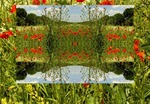
Bischofroda 8
2012This poppy-dotted field lies in the middle of the village of Bischofroda in the German district of Thüringen. The poppy is a well known weed, and sometimes growing in massive quantities. Where rye grows, also poppies grow. It thrives well where the ground is disturbed and poor in nutrients, for instance on construction sites, especially on sandy soil. The plant needs lots of sunlight. Poppies germinate when the seed is exposed to light, even after a long period of darkness, as happened on the French and Belgian battlefields in the First World War, where the ground between the trenches was ploughed by shell-bursts. The village of Fleury in Northern France, was left as it was found at the end of the First World War: ruins, with weeds and fields of innumerable poppies. Thus the poppy became the symbol of 'La Grande Guerre' and of indestructible vital force.
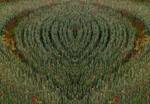
Hayn 7
2012In the spring wheat grows on the fields at Hayn, a village in the German Harz. With a red poppy here and there, the grain fields fold as soft blankets over the hills. Mother Earth produces food for humans and animals here. The domestication of wheat began 10,000 years ago in the Middle East, after which it spread over the whole planet, with a.o. this result.
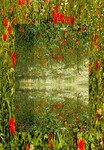
Bischofroda 5
2011This meadow is located in the village of Bischofroda in Thuringia, Germany. On the 1st of May 1920 the new state of Thuringia was proclaimed. Thus came an end to an eccentric patchwork of eight small principalities. When previously traveling through the Thuringian region, one never knew one’s whereabouts, for each country had numerous enclaves scattered in the area of its neighbour. Saxen-Meiningen for instance, with an average width of 15 km, contained 14 enclaves of other principalities, some of which were hardly distinguishable on the German map.
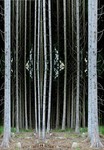
Harzcamp Bremer Teich 11
2011This forest is located in the Harz in Germany. Already in 968 mention was made of mining of silver, copper, lead and zinc in these mountains. With a depth over 500 metres, around 1800 these were the deepest mines in the world. For the benefit of the mining industry some important inventions were made, such as the steel cable and the 'fahrkunst ', a ladder driven by water-power that consisted of two cables with steps that moved back and forth. By stepping from one to the other, one could descend or go up. Nowadays, these kind of stairs are still to be found in the ‘cake-walk’ on fairs.