
France
France A country I visited regularly, in particular because of its mountainous landscapes such as the Alps, the Massif Central, the Vosges and the Pyrenees.
dated 2020 until 2023
(click on an image to enlarge an artwork)
stuur een bericht

Egyptian goose 1
2023The Egyptian goose is a duck-like bird belonging to the family of the Tadorninae (half-geese). This goose mainly lives on land, although it is able to swim well. They are rather aggressive birds and also among themselves they are not very tolerant. This aggressiveness is the trademark of these geese. For instance they use brute force to pinch the nests of other birds - usually affecting Greylag geese, but also birds of prey, crows and other ducks - and they even make no bones about drowning the ducklings of other species. The ancient Egyptians considered the Egyptian Goose as a holy animal and depicted it regularly in their art. This one is searching for food in shallow water, its reflection is clear to see despite of the ripples on the surface.
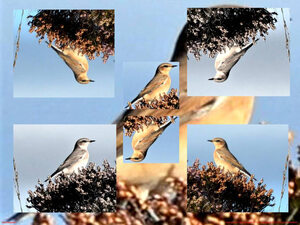
Nightingale 1
2023In a dune strip in Brittany we thought we heard a nightingale. The nightingale prefers to stay in dense shrubs and is therefore difficult to spot. They have a very exuberant singing, but a subtly colored plumage: the upper side is warm brown with orange-brown tail-feathers. The underside is grey-brown with a slightly lighter throat. This took place in September, so I suspected the bird was on its way to Africa. From July on they migrate southwest over France and the Iberian Peninsula to tropical Africa. By mid-September most of them have left and they return in mid-April. The Netherlands form the northern edge of the nightingales area. Their menu consists of all kinds of animal food: insects, earwigs, spiders, daddy-longlegs and earthworms, supplemented with various types of berries. They forage walking on the ground, often in dark spots under brushwood.
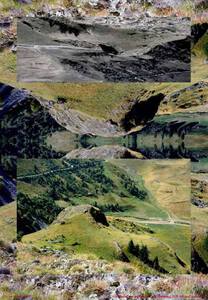
Col de Sarenne 15
2023The beautiful route over the Col de Sarenne, at a stone’s throw from the large ski area of the Alpe d'Huez, is rather unknown, so the area has a relatively intact environment. On the other hand the road surface is particularly bad, especially in the descent. When the Tour de France planned to come this way in 2013, the road was meant to be improved, after some cycling pros had stated that this Col amounted to a definite suicide. But local action groups and nature organisations protested and collected lots of signatures. They threatened to block the road during the Tour, with the result that only the very worst parts of the road were improved. And this undoubtedly contributed to the preservation of the beautiful landscape on the Col de Sarenne.
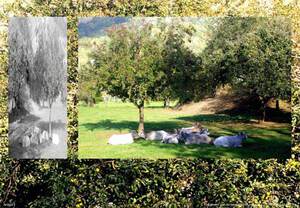
Ariège 7
2023With an average of more than 2000 hours of sunshine a year, the Department of Ariège in the Midi-Pyrénées, is one of the regions of France where the sunshine is strongest. In the largest part of this region the temperature rises above 25°C during 60/80 days a year. Spring begins very early here. While snow is still covering the peaks of the Pyrenees, the corn already rises on the hills of Gascony and the orchards of the Tarn and Garonne begin to bloom. From early April until June the average temperature lies between 16°C and 24°C. Autumn as well is often mild and warm, even October has an average temperature of 16°C to 19°C.
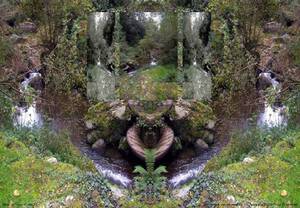
La Frayssinette Brook 2
2023La Frayssinette Brook 2 ‘In de ban van de Aveyron, van droom tot werkelijkheid ' (Under the spell of the Aveyron, from dream to reality') is a book written and self-published by eight Dutch couples who all chose to try their luck in France. As a reader you can find out what has led each one of them to this choice and you will experience their trial and error. One of these adventurers is Peggy, a friend of ours of old. Her house 'La Frayssinette' lies in a small valley in the middle of nature. The living area is naturally absorbed in the surrounding landscape and you always hear the murmur of the stream that runs through the valley. Apart from five guest houses and several camping pitches, there is a large dance floor and a colorful terrace for guests. Down below is a natural swimming pool with a waterfall, which makes one feel to be in paradise.
Auvergne Rhône Alpes 8
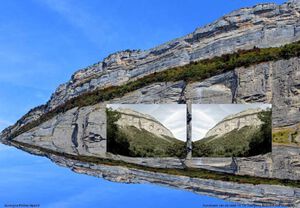
2023The Auvergne-Rhône-Alpes region is located in the south-east of France. Auvergne and Rhône Alpes merged into a new region only recently, in 2016. The Auvergne part is the least populated of the two, only 2.5% of the French population lives here. Rhône-Alpes, on the other hand, is the second largest area in France, with about 6.2 million inhabitants. A large section of Auvergne is part of the Massif Central, ancient volcanic mountains stretching over nearly a sixth of France's total area. The name is derived from the Gallic people the Arverni of which Vercingetorix was king during the Roman invasion.

Tourmalet 7
2022The Col du Tourmalet is a mountain pass in the Pyrenees that owes its name to a flood of the river Gave in the eighteenth century. Because of this flood, traffic was forced to take this pass. The name 'Tourmalet' means something like 'bad detour'. Long before the mountain became known by the Tour de France, it was mainly climbed by pilgrims or by shepherds with their flock. In the year 1910, the 2115 meter high mountain was included for the first time in the route of the Tour de France. The French cyclist Octave Lapize was the first cyclist to reach the top and since then the ascent of the Tourmalet has been part of the Tour almost every year, often as part of the so-called 'Queen's Stage', the toughest stage in the Tour. We also chose this 'bad detour', and not for the first time, because we are always impressed by this special landscape.
Col de Sarenne
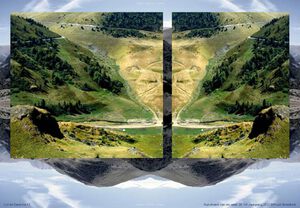
2022The beautiful route over the Col de Sarenne, at a stone’s throw from the large ski area of the Alpe d'Huez, is rather unknown, so the area has a relatively intact environment. On the other hand the road surface is particularly bad, especially in the descent. When the Tour de France planned to come this way in 2013, the road was meant to be improved, after some cycling pros had stated that this Col amounted to a definite suicide. But local action groups and nature organisations protested and collected lots of signatures. They threatened to block the road during the Tour, with the result that only the very worst parts of the road were improved. And this undoubtedly contributed to the preservation of the beautiful landscape on the Col de Sarenne.
Verge, Le Mas-d'Artige 3
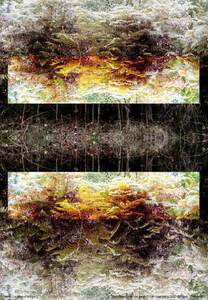
2022In the autumn, these ferns discolored from green to yellow and orange. Most ferns are forest plants, they are strong and hardly suffer from diseases. The fern is a perennial plant, disappearing in the winter to resurface in the spring, but there are also evergreen ferns, that keep their leaves all year round and are resistant to the cold. Some species only keep their leaves in mild winters, such as the woodfern (Dryopteris).
Argelès Gazost 1
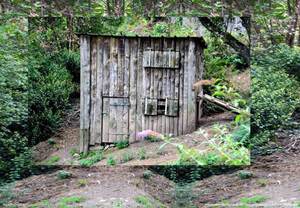
2021Along a small footpath in the forest, near the quiet town of Argelès-Gazost, a small commune in the French department Hautes-Pyrénées, my eyes caught this cool looking henhouse. The village has 3208 inhabitants, who are called Argelésiens and is located at an altitude of 463 meters.

Cirque de Navacelles 3
2021The Cirque de Navacelles is a large basin-shaped valley on the southern edge of the Massif Central in France. The valley was formed about 3 million years ago by glacial erosion. Then the river Vis cut right through the valley, creating a horseshoe lake that dried up later on. There is also a myth associated with the Cirque.The crater is said to have been created by a hoof print of the horse of the giant Gargantua, the father of another well-known giant, Pantagruel. Of these two figures, father and son, created in the16th century by the French humanist François Rabelais, traces and myths can be found throughout France.
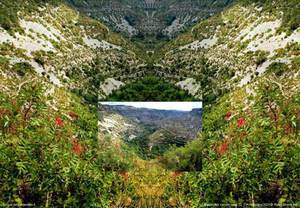
Cirque de Navacelles 5
2021A dangerous but spectacular road, wide enough for just one vehicle, leads to the bottom of this majestic basin-shaped valley: the Cirque of Navacelles. The Cirque is located on the southern edge of the Massif Central in the south of France and was formed by glacial erosion some 3 million years ago. Afterwards the river Vis à Navacelles cut the base of the valley, creating a so-called 'horseshoe lake'. Finally, the lake dried up and left a deposit of flat soil, where the hamlet of Navacelles rose.
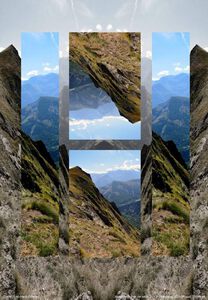
Clavans-en-Haut-Oisans 1
2021Six river-formed valleys come together in the town of Le Bourg-d'Oisans, well known for cycle-racing, because it lies at the foot of the mountain road to the ski-resort of Alpe d'Huez, a famous finish-line in the Tour de France. I was curious to see what it looked like over here, and so we were on our way following the hairpin bends of the road to Alpe d'Huez, and having passed the top, descending the narrow 'post road' at the back of the mountain to the village of Clavans, which led to this view.
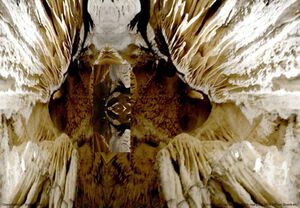
Stalactites and stalagmites 2
2021We are here in the Grotte des Demoiselles, located in the valley of the Hérault in the Cevennen in southern France. The cave is named like this (‘des Demoiselles’ meaning ‘of the Ladies’) because of various sculptures of the Virgin Mary, that might be discerned with a little imagination in the dripping stones. It consists of several contiguous large spaces (called 'cathedrals' by the guides) in which naturally formed stalactites and stalagmites can be seen. A stalactite develops where drops of water seep through the roof of the cave, the stalagmite grows on the bottom where the drops fall. They grow a few centimeters per century. When stalactite and stalagmite touch each other a column is formed. A small train carries the visitors into the cave, after which one can follow a concrete-covered route with various observation-platforms, accompanied by a guide.
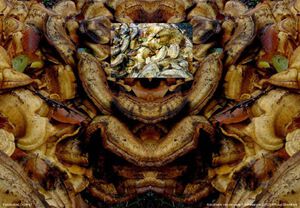
Mushroom Croze 17
2021Since 1790 the Department of Creuze was named after the Croze River, which traverses the department from southeast to northwest. From 275 AD onwards, Germans invaded the hitherto Roman territory. They destroyed numerous Roman monuments throughout Gaul and after 282 the reign of the Romans began to slowly wane. Many Germanic tribes invaded France, as they themselves were hunted by the Huns from the east. Around 475 the reign of the Romans ended, when the Visigoths and after them the Franks and finally Charlemagne took over. Along this road we saw hundreds of meters long rows of mushrooms.....
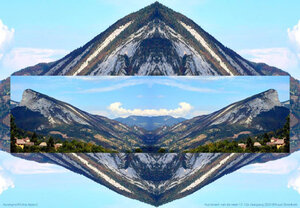
Auvergne Rhône Alpes 2
2020The Auvergne-Rhône-Alpes region is located in the south-east of France. Auvergne and Rhône Alpes merged into a new region only recently, in 2016. The Auvergne part is the least populated of the two, only 2.5% of the French population lives here. Rhône-Alpes, on the other hand, is the second largest area in France, with about 6.2 million inhabitants. A large section of Auvergne is part of the Massif Central, ancient volcanic mountains stretching over nearly a sixth of France's total area. The name is derived from the Gallic people the Arverni of which Vercingetorix was king during the Roman invasion
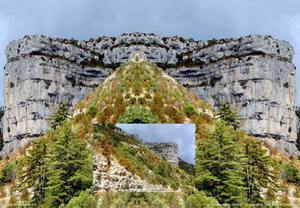
Cirque de Navacelles 6
2020Het Cirque de Navacelles is een groot keteldal aan de zuidelijke rand van het Massif Central in het zuiden van Frankrijk. Een gevaarlijk maar spectaculair weggetje, breed genoeg voor slechts één voertuig, leidt naar de bodem van de vallei. Als je van bovenaf kijkt, vraag je je af hoe zo’n dal hier ontstaan is? Moeten we de legende geloven dat de krater ontstaan zou zijn door een hoefafdruk van het paard van de reus Gargantua, de vader van Pantagruel? Het betreft hier twee reuzen, vader en zoon, van wie de sporen en mythen door heel Frankrijk te vinden zijn. Figuren die in de 16e eeuw gecreëerd zijn door de Franse humanist François Rabelais, die in het nabijgelegen Montpellier medicijnen doceerde. Of werd het dal zo’n 3 miljoen jaar geleden gevormd door glaciale erosie, waarna de rivier de Vis de basis van het dal doorsneed, en er een z.g. hoefijzermeer ontstond? Tenslotte droogde het meer op en liet op de bodem leem en turf achter.
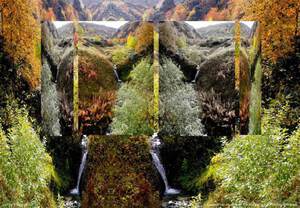
Col de Puymorens 3
2020Autumn reigns on this mountain pass, the Col de Puymorens in the Pyrenees. This pass, with a height of 1920 meters, is the connection between Spain, France and Andorra. Before Andorra became the tax-free capital of Europe and before French and Spanish citizens were seduced en masse to come and fill their cars here, this route over the Puymorens probably was a quiet mountain road.

Col de Sarenne 11
2020The beautiful route over the Col de Sarenne, at a stone’s throw from the large ski area of the Alpe d'Huez, is rather unknown, so the area has a relatively intact environment. On the other hand the road surface is particularly bad, especially in the descent. When the Tour de France planned to come this way in 2013, the road was meant to be improved, after some cycling pros had stated that this Col amounted to a definite suicide. But local action groups and nature organisations protested and collected lots of signatures. They threatened to block the road during the Tour, with the result that only the very worst parts of the road were improved. And this undoubtedly contributed to the preservation of the beautiful landscape on the Col de Sarenne.
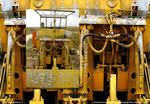
Dizy-le-Gros, Bulldozer 2
2020At the chalk-pit near Dizy-le-Gros in northern France, there is an old rusty bulldozer, which makes one wonder how long ago it was used and why it was left behind. Bulldozers are shovels on caterpillar-tracks that are able to perform heavy labour. They can't lift things up, unlike shovels that are able to lift things and have ordinary tires. The decay of this once powerful tool now reveals a certain beauty.