
Applecross Formation 3
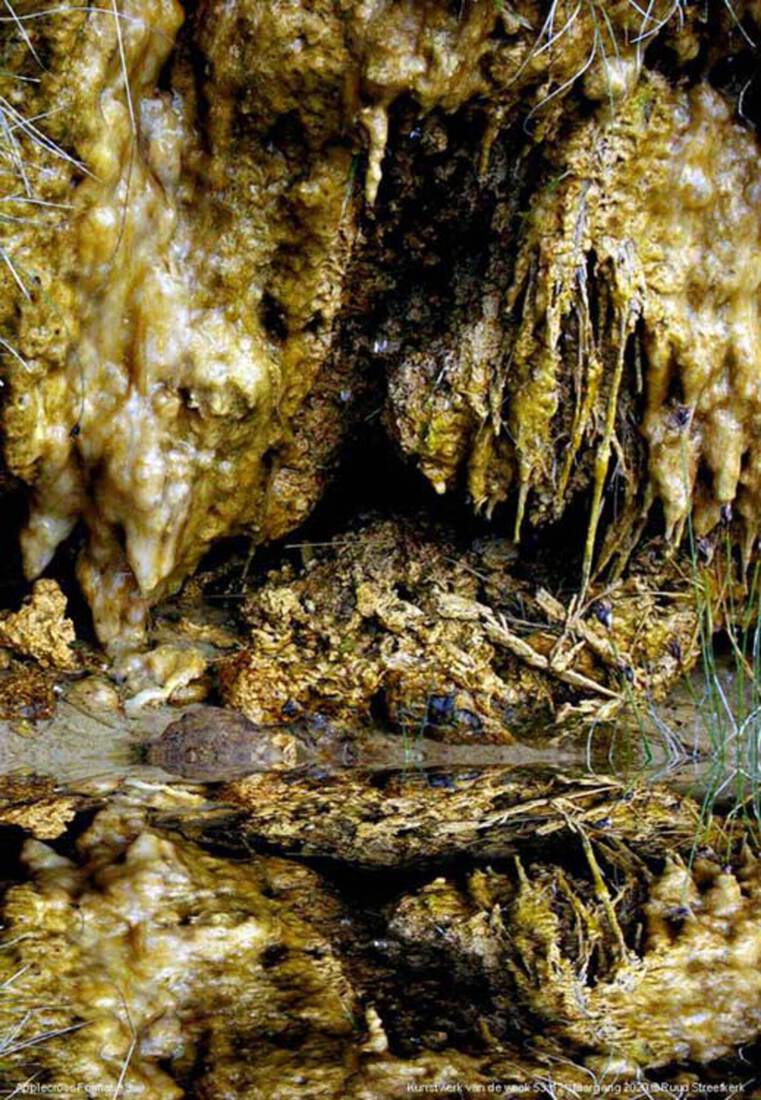
40 x 30 cm, © 2020,
price on request
Two-dimensional | Photography | Digital
processed
Shallow tropical seas are the ideal breeding ground for calcium carbonate, which is deposited on the ocean-floor by the remnants of organisms that live in the warm water in sufficient sunlight, such as coral, algae and shells. These lime residues are naturally ground by strong currents and waves and the remaining sand is deposited on the seabed. It takes thousands to millions of years to form limestone from these deposits, due to the fact that the sediment has to be compacted by the pressure of deposits on top. In this area in Scotland, the vegetation and moisture on the chalky soil have created a spongy marshland. Small streams drain the water towards the sea. Along the banks of such a stream, the chalky water drips down and forms a miniature landscape of small stalactites over the years.