
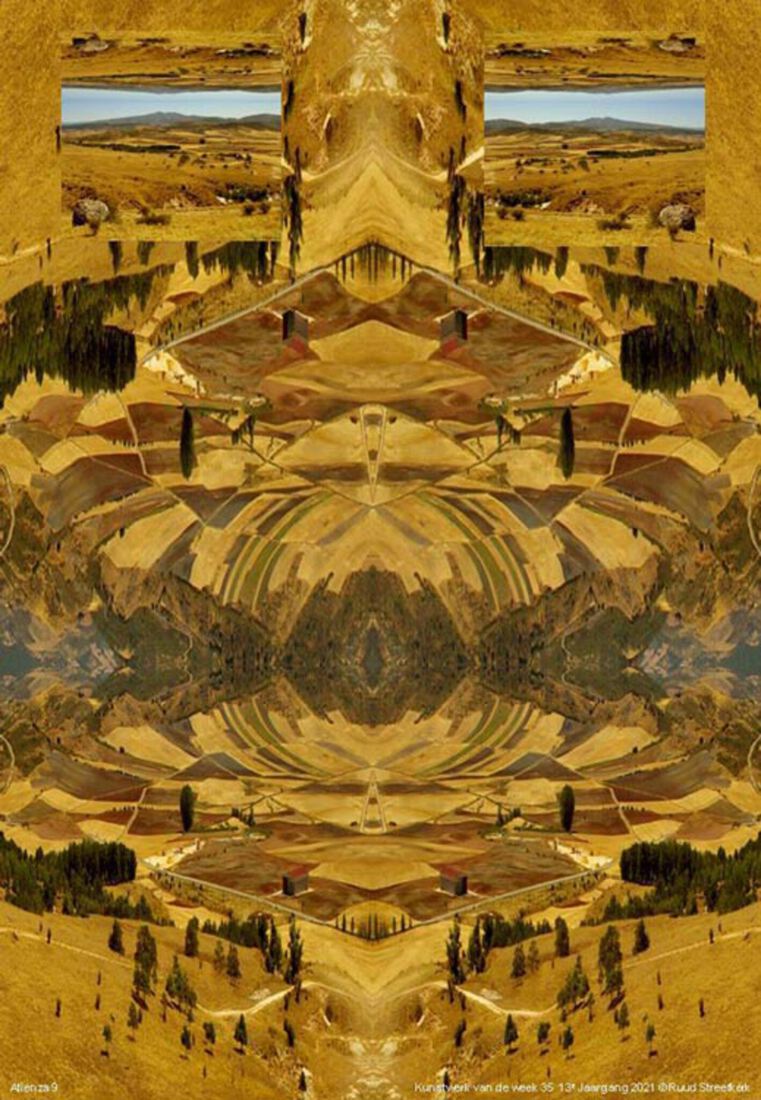
From the village of Atienza, we are looking out over the province of Guadalajara in central Spain. It feels like geological processes from prehistoric times are still clearly visible in this landscape. During the late Eocene, the main lines of the current mountain relief on the Iberian Peninsula arose. In that turbulent period, huge tectonic so-called pop-up and pop-down landslides with material from earlier geological periods took place. During the creation of these mainly NW-SE oriented reliefs, a series of water basins were separated, which accumulated marl, clay and limestone, and which eventually became clogged with limestone. Later on the peninsula underwent a series of rises and falls that tilted the entire massif to the West. As a result, the inland lakes were drained again, causing an intense erosion of the aforementioned sediments.