
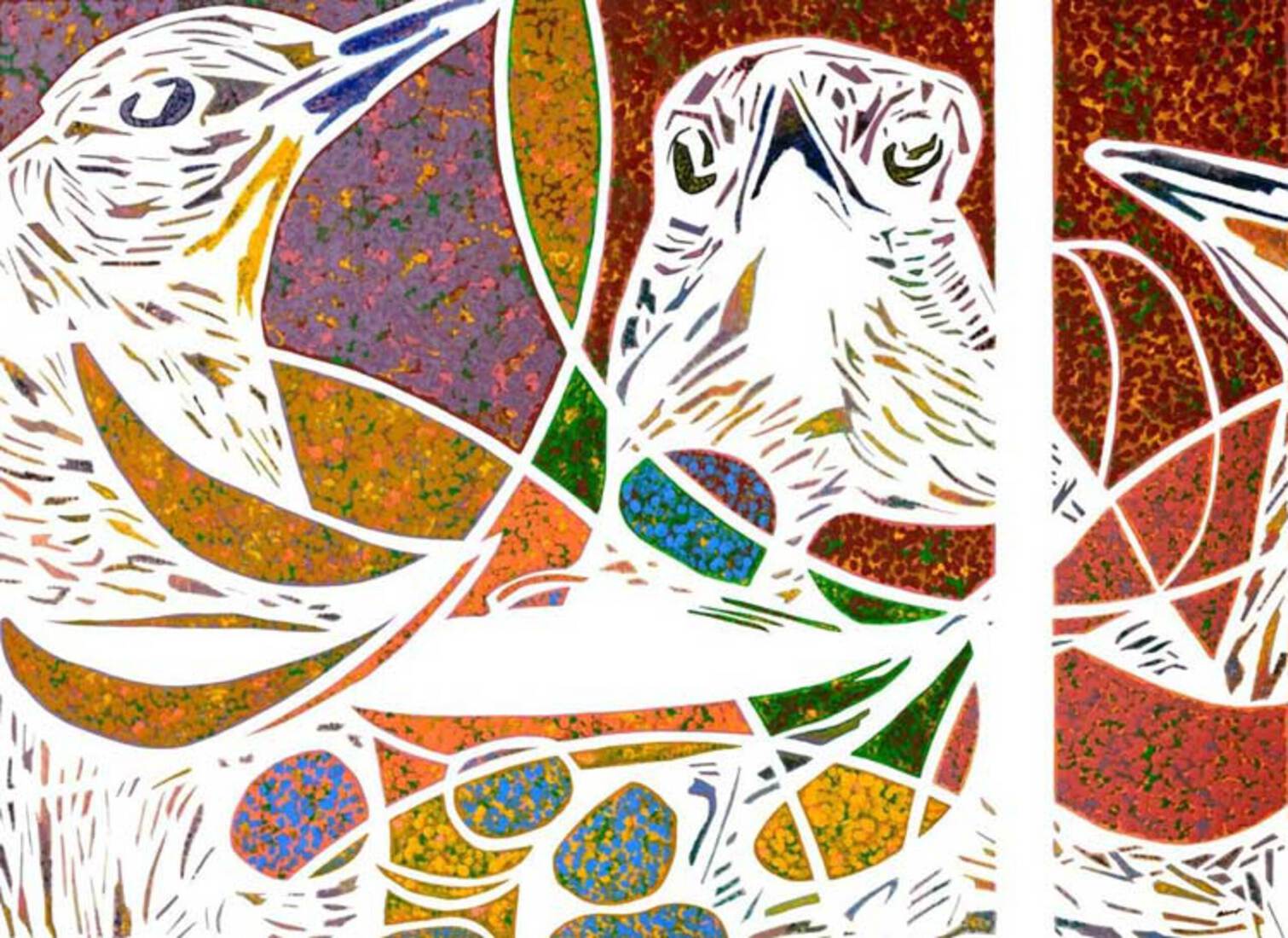
In the Serviceberry tree in our garden I spot a female blackbird. Males are predominantly black and have a yellow eye ring and beak. In the breeding season, their melodious singing can be heard in the morning and evening. The female has a yellow-brown or reddish-brown plumage, which looks uniform from a distance, but the underside and the throat are lighter colored and irregularly spotted or striped. The beak and also the eye ring of the female is lighter colored than that of the male and is rather inconspicuous between the brown plumage. Blackbirds have a pointed beak, which is perfectly adapted to consuming seeds. The sharpness makes it possible to pick up small particles, but the length also allows the devouring of larger food. The blackbird is omnivorous and feeds on insects, worms, berries, fruits, snails, waste, bread and bird-food. They usually forage hopping and chopping in the ground. In doing so, they shed moss and leaves, thus aerating the soil. With their big eyes, they search for their prey by tracking the ground and when looking for earthworms, they keep their heads wry, probably to hear soil life. After feeding, they sometimes spit out pellets containing undigested seeds. Consequently the seeds of berries are deposited miles away and so it promotes the distribution of plants, also in the interest of its own species for which food supply is thus ensured.