
Fredville Park Trunk 3
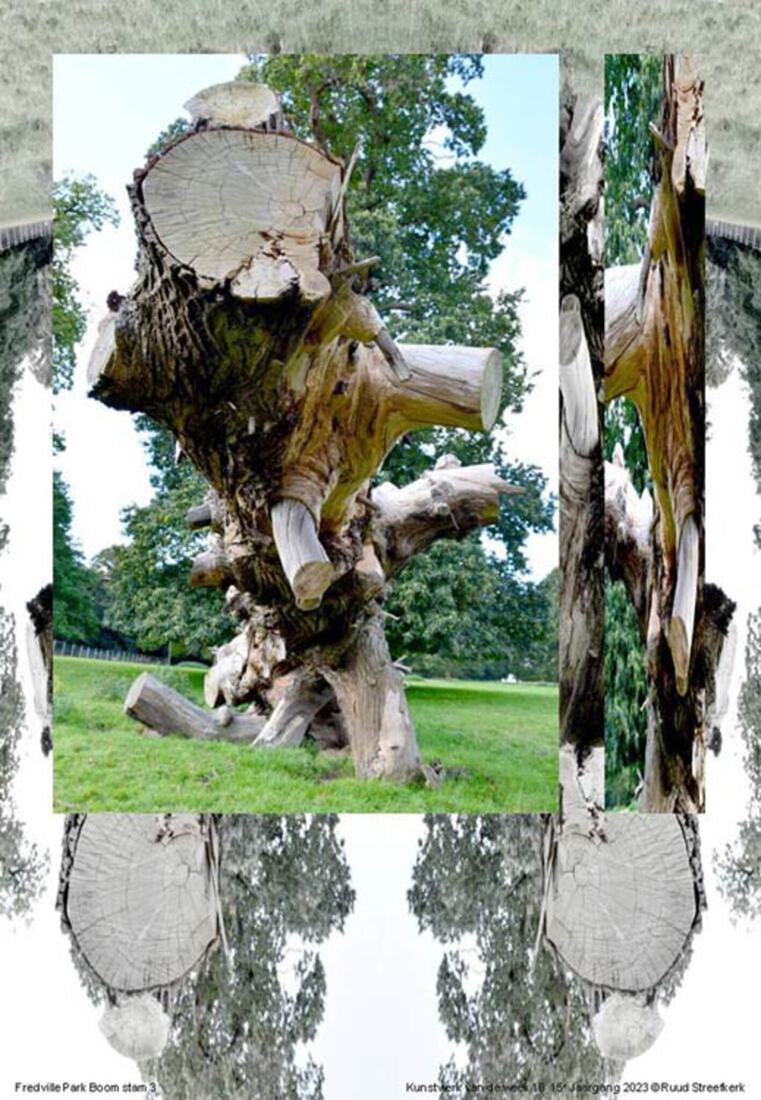
50 x 40 cm, © 2023,
price on request
Two-dimensional | Photography | Digital
processed
We were in search of the 'Majesty Oak', the largest oak in the UK, on the Fredville Park Estate in Nonington, when we spotted this trunk of a Sweet Chestnut. Sweet chestnuts are recognizable by the long and coarsely-serrated, lancet-shaped leaves, glossy dark green on the upper side and slightly lighter on the bottom side. Beetles, flies and bees are the pollinators of the flowers. In autumn, the ripe fruits of the sweet chestnut fall from the tree. The nuts are embedded in a vicious prickly shell, which is formed by the bracts. Sweet chestnuts can be cooked, peeled and eaten. This is in contrast to the nuts of the poisonous Horse Chestnut (Aesculus hippocastanum), belonging to a completely different family. Not only humans, but as well wild boars, squirrels, jays, crows and mice eat sweet chestnuts. They ensure the scattering of chestnut trees in the wild.