
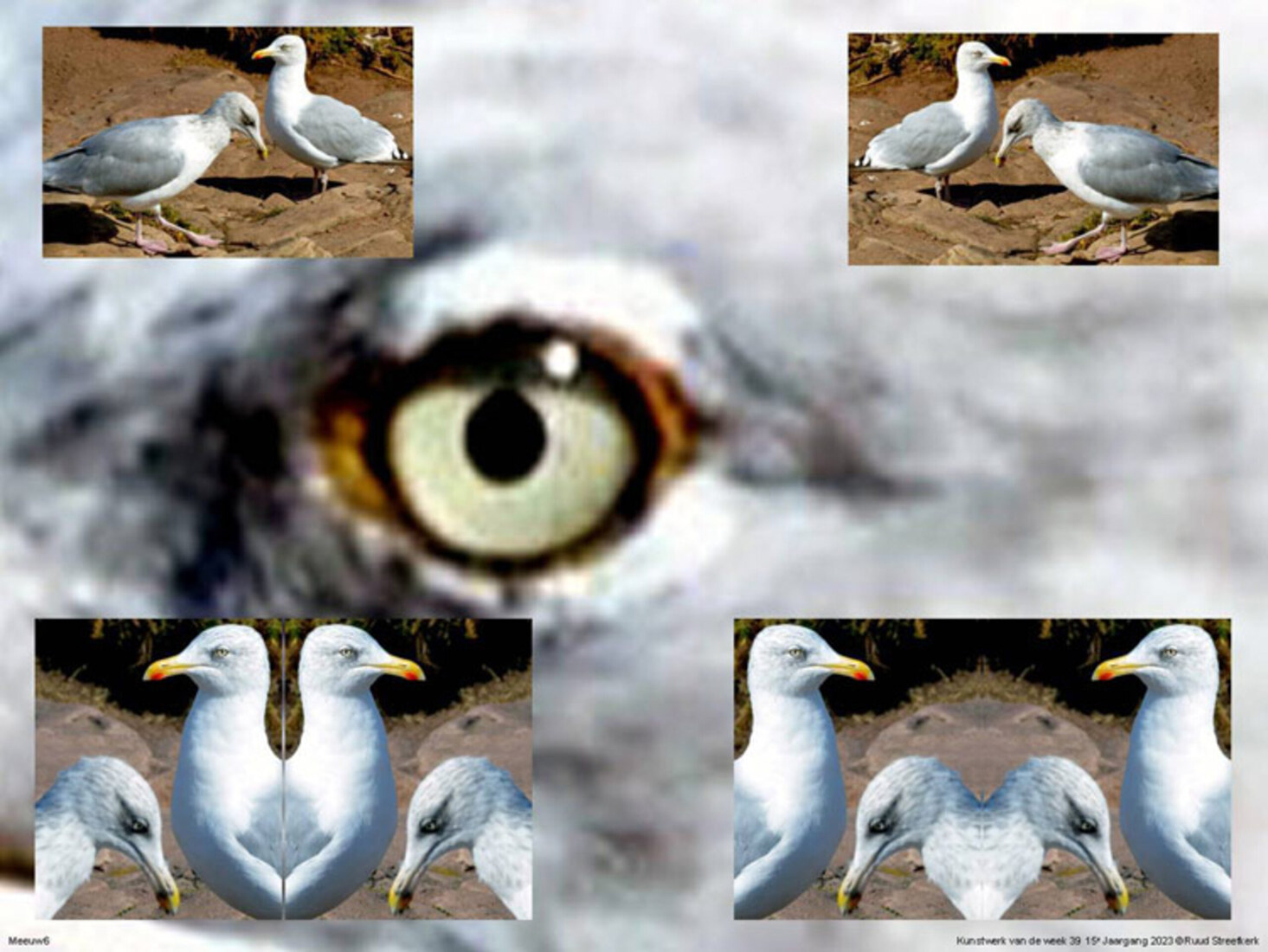
Most Gulls are carnivores. They eat both bait and live preys. Their prey usually consists of crabs and small fish. Generally gulls are birds of the coast and open inland and they will rarely be found far out at sea or in forests. The larger species have a very high life expectancy: there is a case known of a herring gull that proved to be 49 years old. Gulls nest in large, densely packed and noisy colonies. They lay two or three speckled eggs in a nest made of plant material. The young are born with dark spotted down and they are nidifugous: they’re able to walk immediately. The larger species get their adult plumage only after four years, the smaller species after two years. Gulls are ingenious, curious and intelligent birds and they have adapted themselves successfully to the human environment. They use complex communication methods and have highly developed social structures. In many colonies one can observe for instance a defensive nagging-behavior, with which potential rivals are kept at a distance. Some species, such as the herring gull, have even developed skills to use tools.