
Spain
Spain An impressive country with beautiful rough mountains, fissures and plains, which once collided with the European continent.
dated 2020 until 2023
(click on an image to enlarge an artwork)
stuur een bericht
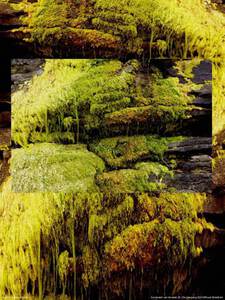
Algen Playa del Enguilo 2
2023Currently much research is done on algae in the context of sustainable solutions to our environmental problems. Algae have a number of advantages over plants: they contain a high percentage of oil and are very productive. They also grow in salt water and are able to use industrial waste as a food source. They can provide us with biodiesel and perhaps even solve our CO2 problem. GSBS (Green Sea Bio System), for instance, is working on a process whereby CO2 is extracted from the air by an algae culture. Using solar energy, photosynthesis and an electromagnetic field, carbon from the CO2 is bound and oxygen returned to the environment. When the remaining ‘algae-soup' is refined, the various components, such as proteins and fatty acids, used in food and cattle-forage, may be won separately. The remaining oil can serve as fuel and to generate electricity. So algae are perhaps the solution for both our food- as well as our CO2-problem.
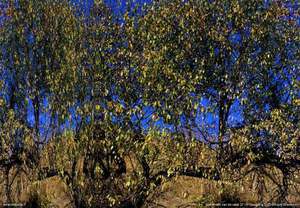
Almond tree 7
2023The almond tree is a small and elegant deciduous tree, that grows in mountainous areas, between 700 and 1700 meters altitude. The tree thrives best on rocky soil and on sunny slopes in a Mediterranean climate with warm dry summers and mild, wet winters. The tree is on average 4 to 10 meters high. The young twigs are initially green, but become purple- to brownish when exposed to sunlight. In their second year, the branches become greyish. The upper surfaces of young leaves initially have a light, soft hair that disappears later on. The tree blooms exuberantly in the early spring, when the tree is still leafless. The flowers are white to pale pink, have a diameter of 3-5 cm and five petals. The flower contains a large amount of nectar, attracting many insects - especially bees- who provide for the pollination.
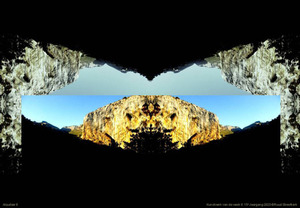
Alquézar 8
2023The village of Alquézar lies on a limestone spur from the Eoceen, West of the gorge of the Rio Vero on the South side of the Pyrenees. It developed around a castle and a church from the year 1100. The name is derived from the Arab Al Qaçr, which means fortress or castle. The castle became the main point of defence for the nearby town of Barbastro. In the area are more than 60 limestone caves with prehistoric cave paintings, which led to the proclamation of the region as a World Heritage Site by the Unesco.
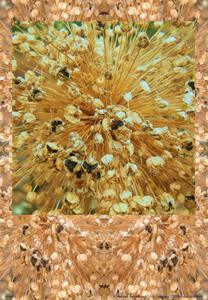
Allium 4
2023In late summer, this onion flower is a bit dehydrated. The origin of the Allium is unclear, but it probably originated in Central Asia, although wild specimens were never found there. Writings from 3000 BC show that the onion was first grown in Iran, Afghanistan and China and later in ancient India. From India, the crop was brought to Greece and Egypt. In decorations and hieroglyphics of pyramids, the onion is frequently depicted. The pyramid builders were given a.o. onions as food, because it was believed that they were beneficial to physical strength and helped prevent diseases. Onions were also laid in tombs, as food and medicine during the journey to the afterlife. By their structure its peelings were considered as a symbol of eternity. After the introduction by the Romans in Europe, the onion quickly became popular as a vegetable. In the 13th century there was a lively trade in London, where even imported onions were sold.
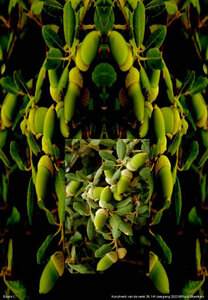
Acorns 1
2022An acorn is the fruit of an oak tree. It is a nut with one, or sometimes two seeds. The length of an acorn varies between 1 to 6 cm and it is 0.8 to 4 cm wide. Acorns cannot be stored because they do not retain their germination power for more than one season. They are an important food for animals which live near oaks, such as mice, squirrels, wild boars, deer and some ducks and other birds, as well as bears. For these animals, sometimes 25% of their winter supply consists of acorns. In the past, pigs were also fed with acorns (mast), but they are poisonous for horses.
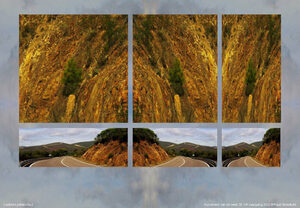
Castile-La Mancha 2
2022We are here in the Spanish region that played an important role in the world famous adventures of Don Quixote. Surrounded by the dry, dusty plains of Castile-La Mancha lies the marshland Tablas de Daimiel, the smallest of the 15 national parks in Spain. Mary bird-species flourish in these wetlands, flamingos are also regularly spotted here. Therefore this protected bird area is a favorite destination for birdwatchers. There are three walking routes through the marshy nature reserve, passing a series of wooden bridges, viewpoints and bird huts. In that way many birds and their nests can be observed up close.
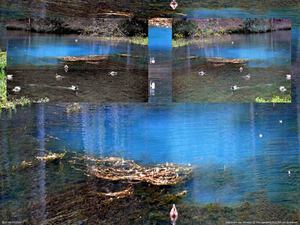
Bron del Rio Ebro 2
2022In a small forest lake full of ducks, beautiful turquoise-tinted water rises. We are here at the source of the Ebro in Fontibre in the Cantabrian Mountains of northern Spain, about 880 meters above sea level, near Reinosa. Fontibre refers to the Latin Fontes Iberis, so the Ebro is also the namesake of the Iberian Peninsula. But although until recently this place was considered the source ('nacimiento') of the Ebro, today the sources of the Hijar, about 27 km away at the Pico de Tres Mares at an altitude of 1980 m, are considered the real source of the Ebro. Downstream is the Rioja wine region and large hydroelectric power plants supply about half of spain's hydroelectricity. At its mouth in the Mediterranean, the river has finally formed a large delta of almost 8000 ha, the most important wetland in Catalonia, an 'aviary' where more than a hundred thousand birds of up to three hundred species gather.
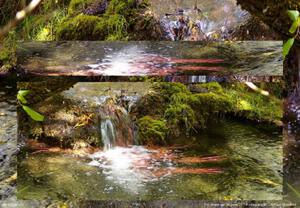
Source Cuervo 6
2022It is autumn, we decide to visit the source of the river Cuervo (Nacimiento del Río Cuervo) located in an enclave full of beautiful waterfalls in the Cuenca mountains in Castilla la Mancha in Spain. It has been raining heavily and the more rain there is, the bigger the waterfalls are. In addition, due to the abundance of precipitation and the high altitude, many species of fauna and flora are found here, including 19 species of wild orchids, which do not occur in other parts Spain.
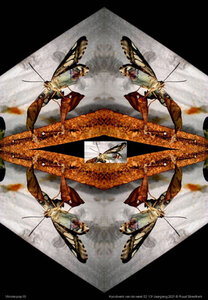
Butterfly pupa10
2021During her lifetime, a female butterfly lays as many eggs as possible, but of every hundred eggs, between 95 and 99 individuals die before they are able to mate and deposit eggs themselves. The remaining 1 to 5% survives and that is enough to secure the next generation. At their last peeling the caterpillars strip off their last skin and turn into a pupa. They can do this hanging from a branch or leaf, but many caterpillars leave their host plant to pupate on- or in the ground or the litter-layer.There are also species that attach themselves to the host plant, for which they spin a silky cocoon, such as the silk-worm. It seems as if the pupa is dead, it hangs from the stem and does not move. Nevertheless, it may certainly give a sign of life, if one touches them they will move with their abdomen and some make a rattling sound. Inside the pupa, the caterpillar is converted into a butterfly. How this takes place exactly is not yet known, but it is certain that almost all body parts of the caterpillar are annihilated. From these substances the butterfly is made up.
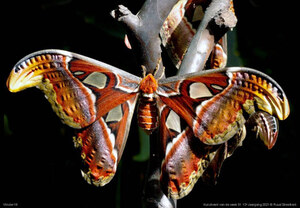
Butterfly 18
2021The Atlas moth (Attacus Atlas) belongs to the family of the Saturniidae and is found in large parts of Southeast Asia. They can reach a wingspan of about 25 cm and are therefore one of the largest butterflies in the world. The wings, with a complex pattern of black, white, pink and purple, can range from yellow-brown to maroon and burgundy. Both forewings have a prominent extension at the tip, with markings that resemble the head of a snake! Because the animal is often bred in butterfly gardens, much is known about lifestyle and development. The caterpillars are green with a red colored spot here and there. They eat large amounts of leaves of various types of plants. The adult moth, on the other hand, has no developed mouthparts and does not absorb food during its lifetime. The Atlas butterfly flies with a slow wing beat. With a downward stroke of the colossal wings, the body is thrown upwards, resulting in a very angular flight. But every flight takes valuable energy and can take days off their already short life span of only one to two weeks. So they conserve energy by flying as little as possible. The female usually does not even leave the tree of which she enjoyed the hospitality as a caterpillar
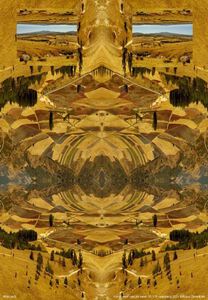
Atienza 9
2021From the village of Atienza, we are looking out over the province of Guadalajara in central Spain. It feels like geological processes from prehistoric times are still clearly visible in this landscape. During the late Eocene, the main lines of the current mountain relief on the Iberian Peninsula arose. In that turbulent period, huge tectonic so-called pop-up and pop-down landslides with material from earlier geological periods took place. During the creation of these mainly NW-SE oriented reliefs, a series of water basins were separated, which accumulated marl, clay and limestone, and which eventually became clogged with limestone. Later on the peninsula underwent a series of rises and falls that tilted the entire massif to the West. As a result, the inland lakes were drained again, causing an intense erosion of the aforementioned sediments.
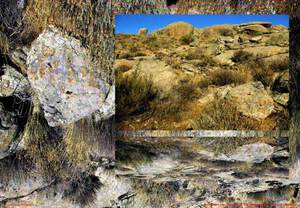
Arroyo de la Susana 9
2021We are here in Andalusia, in the south of Spain. The first civilization to settle here after the Neanderthals and the Cro-Magnon man, was the Phoenician. Nevertheless, the Phoenicians found an already developed Iberian culture, grown from Neolithic tribes originating from Africa. In the Iron Age the Turdetani lived here, mingling with Celts and Greeks who had colonized the northeast of Spain. Around 500 BC, Carthaginians invaded the area. They lingered in Spain and tightened their grip on the area, without coming as far as an actual annexation. After that, Andalusia was the last stronghold of the Moors, until they were expelled in 1492. But Moorish architecture is still abundantly found here. Finally, the Andalusian dialect became the basis of the Spanish language spoken throughout Latin America, due to the role that Seville played as a gateway to the Spanish colonies in America in the 16th and 17th centuries.
Mirador del Lirio 2
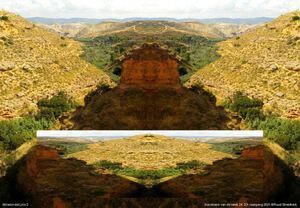
2021The Mirador del Lirio is a strategic look-out post in southern Spain. An immense sandstone mass hanging at an altitude of 400 m above the valley of the river Guadiana Menor, an important tributary of the Guadalquivir. There is a great contrast in the landscape we’re looking at. We see a desert landscape, mainly caused by agriculture and animal husbandry and a lack of precipitation. But the contrast with the green valley through which the river meanders between poplars and olive trees, is spectacular. In the distance we see the Natural Parc of the Sierras de Cazorla, of which the southern border is formed by this river.
Coll de Nargó 12
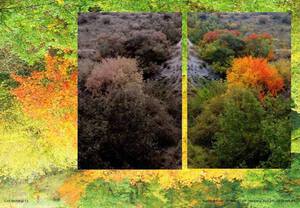
2021The trees turn red, orange and yellow. It is autumn near the village of Coll de Nargó on the sparsely populated plateau of Urgell in Northern Spain. Coll de Nargó celebrates its most important festival on July 25, the feast of Saint Jacob, San Jaime or Santiago. Saint Jacob was an important apostle (and reportedly cousin) of Jesus, originally a fisherman on the Sea of Galilee together with his brother John, hence his attribute: the Jacob-shell. He is Patron Saint of Spain because he is accredited having christianized the country. Santiago de Compostela, where allegedly his grave was found, is a well-known Spanish pilgrimage site. The Saint is patron of soldiers, horsemen and warriors, workers, porters, hatters, furriers, hosiers, guards, chain-smiths, pharmacists and drugstores, veterinarians and of course pilgrims.
Arroyo de la Susana 3
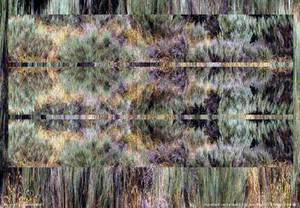
2021We are in Arroyo de la Susana, in a warm part of the Spanish inland. I was struck by the dwarf bushes that grow here, half dehydrated, turning the green into yellow and purple. It is called Spanic Gorse. The fact that it grows around here is not so strange, because it withstands summer heat as well as frost (even up to -20° Celsius). It prefers a dry to slightly moist, sandy soil. It is suitable for warm places, such as sheltered (roof) gardens facing South or next to buildings and it may be combined with rock-garden-plants.
Abella de la Conca 1
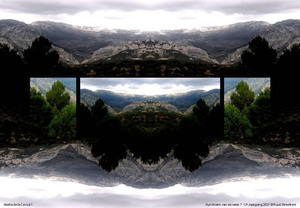
2021Abella de la Conca, is a small, old and perfectly preserved village tucked away in the Catalan Pyrenees. There are no stores or cafes, and this pre-eminently constitutes the beauty of Abella de la Conca. There is one particular thing to do though: climb! Surrounding the village is a series of limestone rock walls, offering many vertical climbing possibilities, such as overhanging rocks with all kinds of special angles. There are routes for everyone and for every season. And for those who want to visit this very unique destination, there is a climbers-lodge run by climbers: the Eco-Refugi is the only available accommodation in the village, with private rooms, a communal kitchen, yoga room, library and dining room.
Allium 3
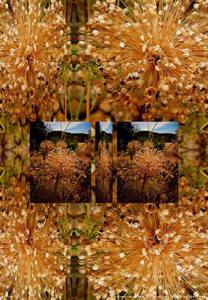
2020In late summer, this onion flower is a bit dehydrated. The origin of the Allium is unclear, but it probably originated in Central Asia, although wild specimens were never found there. Writings from 3000 BC show that the onion was first grown in Iran, Afghanistan and China and later in ancient India. From India, the crop was brought to Greece and Egypt. In decorations and hieroglyphics of pyramids, the onion is frequently depicted. The pyramid builders were given a.o. onions as food, because it was believed that they were beneficial to physical strength and helped prevent diseases. Onions were also laid in tombs, as food and medicine during the journey to the afterlife. By their structure its peelings were considered as a symbol of eternity. After the introduction by the Romans in Europe, the onion quickly became popular as a vegetable. In the 13th century there was a lively trade in London, where even imported onions were sold.
Arroyo de la Susana 10
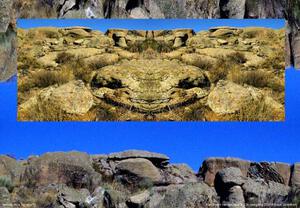
2020We're in Andalusia, in the South of Spain. Andalusia is one of the largest regions in terms of population, with about 8 to 9 million inhabitants. Arroyo means brook or creek, but it doesn’t look as if water has been flowing over these stones for a long time. Once the Romans as well as the Moors had a flourishing-time here, but on this spot, no evidence whatsoever is to be seen. Although it is hot and dry, and the road is very bad, this country possesses a great beauty.
Bohonal 5
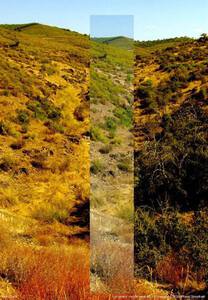
2020We are here in Bohonal de Ibor in the Extremadura, a hot and dry area in southwestern Spain. However, this is also the river basin of the Tagus River (Tajo) which rises in the northeast of Spain (between Teruel and Cuenca) at an altitude of 1590 m. It has a length of more than 1000 km and is thus the longest river of the peninsula. The Tagus flows westwards and forms, over a distance of 60 km, the border between Spain and Portugal, before flowing into Portugal as the river Tejo. At the Portuguese city of Santarém, the Tagus can be sailed. From here on the tidal effect from the Atlantic Ocean is already perceptible. Finally, before Lisbon, the river flows into an estuary, which is an important natural port but also a valuable nature reserve.
Catalonia 3
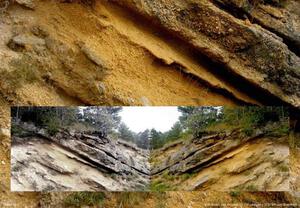
2020Slowly the road winds up through the valley towards the Coll de Bóixols in Catalonia. To construct the road, parts of the mountain were struck off, creating this structure in the bends of the road. Catalonia has a population of more than 7.5 million inhabitants, the vast majority of which are Catalans. The region has a highly developed own identity and by a constitution of autonomy it was recognized as a nation within the country of Spain. But since a unilateral declaration of independence by the Generalitat de Catalunya in October 2017, this autonomy has been the subject of a dispute with the Spanish government.